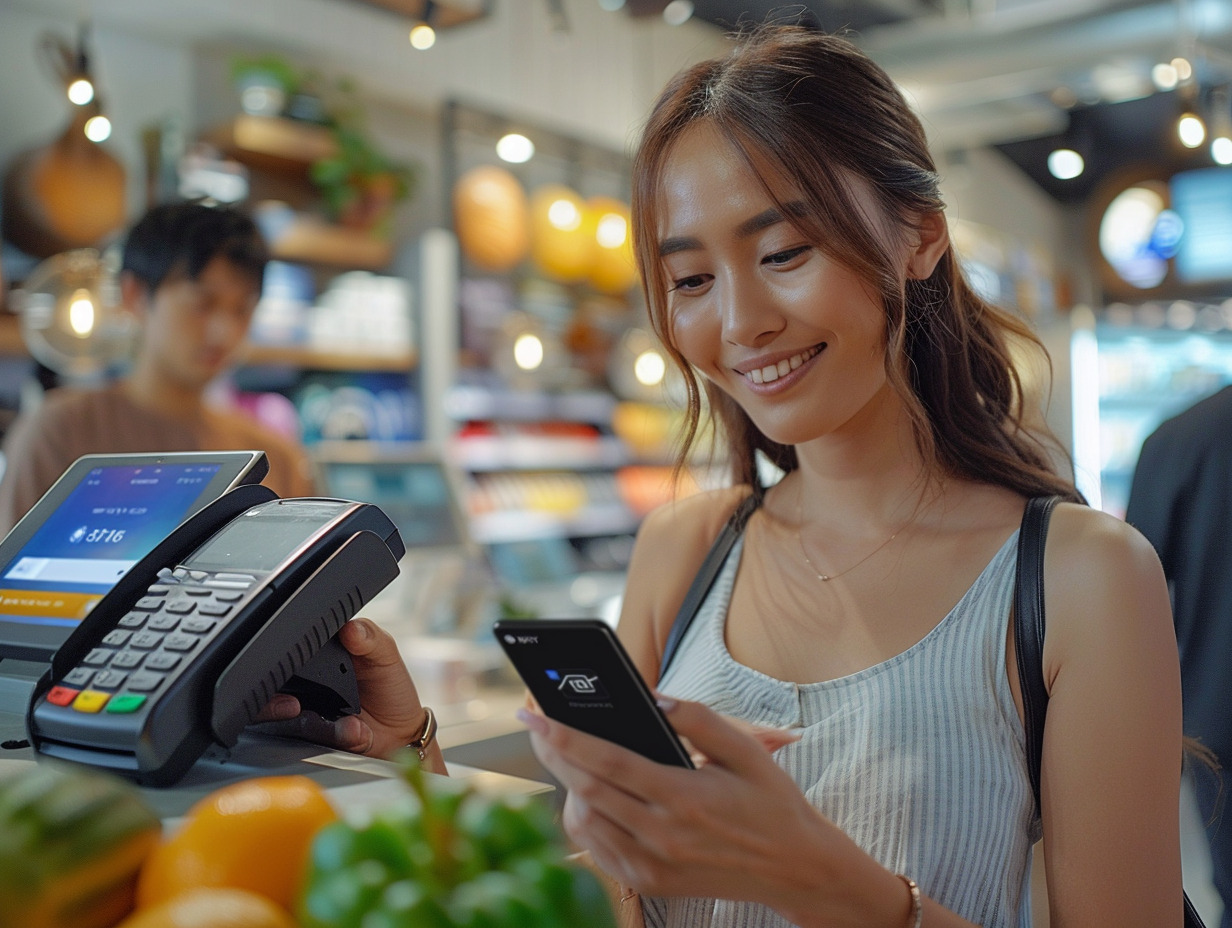
Mobile payment is gradually becoming a standard in everyday transactions. The simplicity and speed offered by applications like Apple Pay, Google Wallet, and Lydia are attracting more and more users. These solutions allow for contactless payments, simply using a smartphone, providing a practical alternative to traditional bank cards.
In addition to facilitating purchases, mobile payment offers advanced security levels through technologies like biometrics and encryption. This evolution opens new perspectives for merchants and consumers. In light of this transformation, what are the advantages and potential future developments?
The advantages of mobile payment
With the rise of mobile payment solutions, consumers benefit from an enhanced transaction experience. Applications like Apple Pay and Google Wallet provide increased security through biometrics and encryption.
Security and convenience for consumers
Mobile payments stand out due to their enhanced security. Encryption technologies and biometric verification, such as fingerprint scanning or facial recognition, protect transactions. Consumers also appreciate the flexibility and smoothness of the transaction process, contributing to a better customer experience.
Advantages for businesses
For businesses, mobile payments represent an opportunity for modernization and cost optimization. Players like Treezor, the European leader in Banking-as-a-Service (BaaS), offer embedded finance solutions tailored to the needs of businesses.
- Enhanced security through biometrics and encryption
- Speed and simplicity of transactions
- Flexibility and smoothness for consumers
- Cost optimization for businesses
Technologies and innovations
Innovations like Buy Now Pay Later (BNPL) and cryptocurrency payments are also on the rise. Consumers are increasingly using these new payment methods for their convenience and flexibility. Parm Mobile Carrefour, for example, has integrated various mobile payment solutions, thus facilitating purchases for its customers.
Mobile payment solutions continue to evolve, offering even more security and practicality. Businesses and consumers are now better equipped to navigate an increasingly digital transaction environment.
The future prospects of mobile payment
The mobile payment market is preparing for a major transformation. According to a report published by McKinsey & Company in October 2022, the share of mobile payments in overall transactions is expected to grow exponentially. Businesses are increasingly integrating embedded finance and BaaS (Banking-as-a-Service) to meet their customers’ needs.
Technology and adoption
New technologies, such as instant payments and Buy Now Pay Later (BNPL) solutions, continue to attract consumers. They seek a smooth and secure user experience. Cryptocurrencies are beginning to establish themselves as an alternative payment method, offering additional flexibility.
Major players
Players like Treezor, the European leader in BaaS, play a fundamental role in this evolution. By offering embedded finance solutions, Treezor enables businesses to optimize their costs and modernize their payment services.
- The share of mobile payments is growing rapidly
- Integration of embedded finance by businesses
- Growing adoption of cryptocurrencies
- Key role of BaaS players like Treezor
In light of these developments, businesses are defining their payment strategy based on their customers’ expectations. The alliance between high-performing technology and cost optimization is becoming a priority to remain competitive in this rapidly expanding market.