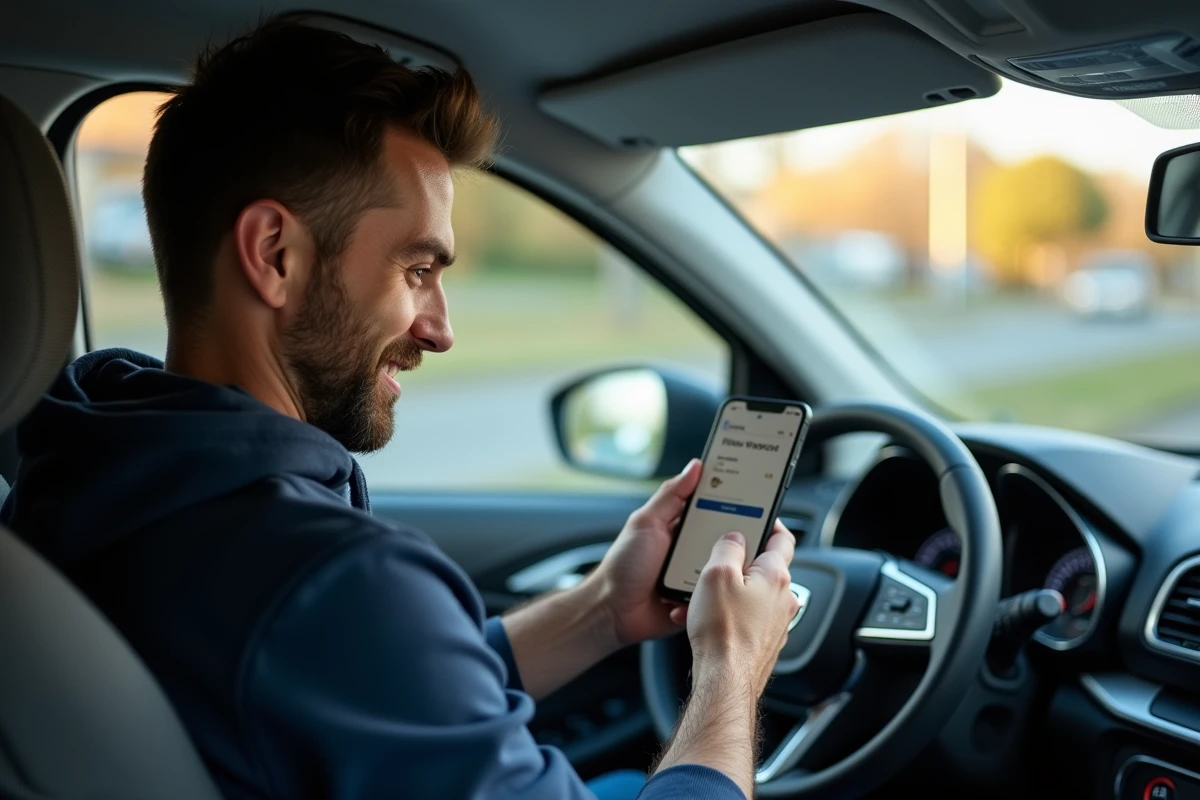
A Lyon-Marseille trip listed at 18 euros that finds no passengers, while the same route listed at 22 euros by another driver fills up in just a few hours. The difference lies not in the price itself, but in how the fare is constructed and presented on BlaBlaCar.
BlaBlaCar Boost Pricing: Understanding Dynamic Pricing
Since the end of 2023, BlaBlaCar has been gradually rolling out a dynamic pricing system on certain high-demand corridors. The app automatically suggests a fare higher than the strictly shared cost, based on local demand and the historical filling rate of the trip.
Specifically, when publishing a Paris-Bordeaux trip on a Friday evening, the platform may propose a higher amount than the usual rate. This suggested fare reflects the tension between supply and demand on this route at that specific moment. Ignoring this suggestion to set a minimum price means missing out on a profitability lever that BlaBlaCar puts directly in the driver’s hands.
To take advantage of it, you can find tips on Neo News that detail the mechanics of this module and the corridors where it is most frequently activated.
The trap would be to push the slider too high. BlaBlaCar’s suggestion remains calibrated against the cheapest rail fares on the same route, especially since the merger with SNCF Connect in 2022. A carpooling price that exceeds the TGV Ouigo ticket on the same time slot drives passengers away, plain and simple.
BlaBlaCar Pricing and Legal Framework of Cost Sharing
Increasing fares on BlaBlaCar does not mean turning carpooling into a commercial activity. The General Conditions updated in March 2024 remind us that the driver must remain below a threshold of professional remuneration. The platform can deactivate an account or delist trips if there is suspicion of regular profit.
We are talking about cost sharing: tolls, fuel, vehicle wear. The goal is to cover these expenses, not to generate income. In practice, there is some leeway, but it has clear limits.
- The fare must cover the actual costs of the trip (fuel, tolls, proportional maintenance) without generating recurring net profit
- BlaBlaCar monitors accounts whose cumulative income exceeds a certain threshold over a given period
- A driver reported by multiple passengers for excessive pricing risks delisting without notice
Setting a price at the ceiling allowed by the algorithm is not prohibited. But doing so systematically on all trips, week after week, can trigger an alert. The nuance is there: you optimize trip by trip, not in a flat-rate manner.

Seat Filling and Price Per Passenger on BlaBlaCar
A high fare with zero passengers earns less than a moderate price with three seats filled. Filling seats remains the primary lever for real profitability for a regular driver.
On BlaBlaCar, the displayed price is per passenger. A trip at 25 euros with three passengers more than covers the costs of a Paris-Lyon trip, toll included. The same trip at 32 euros with only one passenger leaves the driver at a loss.
Publishing Times and Days
Publishing a trip on Sunday evening for a departure the following Friday gives a week of exposure in search results. Trips published the day before departure get drowned among dozens of competing offers, often at cut prices from drivers looking to fill up urgently.
Feedback varies on this point, but the observable trend is clear: drivers who publish early and adjust their fare upwards mid-week (when supply becomes scarce) achieve a better filling rate at a higher price.
Suitable Pickup Points
Offering an accessible meeting point (shopping center parking lot, subway exit, bus station) increases the number of potential passengers. Departing from a residential address in an outlying suburb mechanically reduces demand, regardless of the fare.
BlaBlaCar Driver Profile: What Justifies a Higher Fare
A verified profile with a photo, described vehicle, and several positive reviews allows for setting a fare slightly above average without losing passengers. Travelers are willing to pay more for a well-rated driver.
- A completed profile (photo, bio, conversation and music preferences) increases visibility in BlaBlaCar search results
- Reviews play a direct role in algorithmic sorting: a driver with around fifteen positive evaluations appears higher than a new account at the same price
- Accepting instant booking instead of manual validation shortens the passenger’s decision time, favoring quick filling
In practice, there is more pricing latitude when the profile inspires trust. A driver rated “Ambassador” or equivalent can charge two to three euros more per trip than the base suggestion, without visible impact on filling.
The best strategy combines these four elements: leveraging the dynamic price suggestion when it activates, publishing early to capture demand, enhancing your profile to justify a higher fare, and never losing sight of the legal framework that caps earnings. A well-filled trip at a reasonable price earns more than an inflated fare with no passengers.