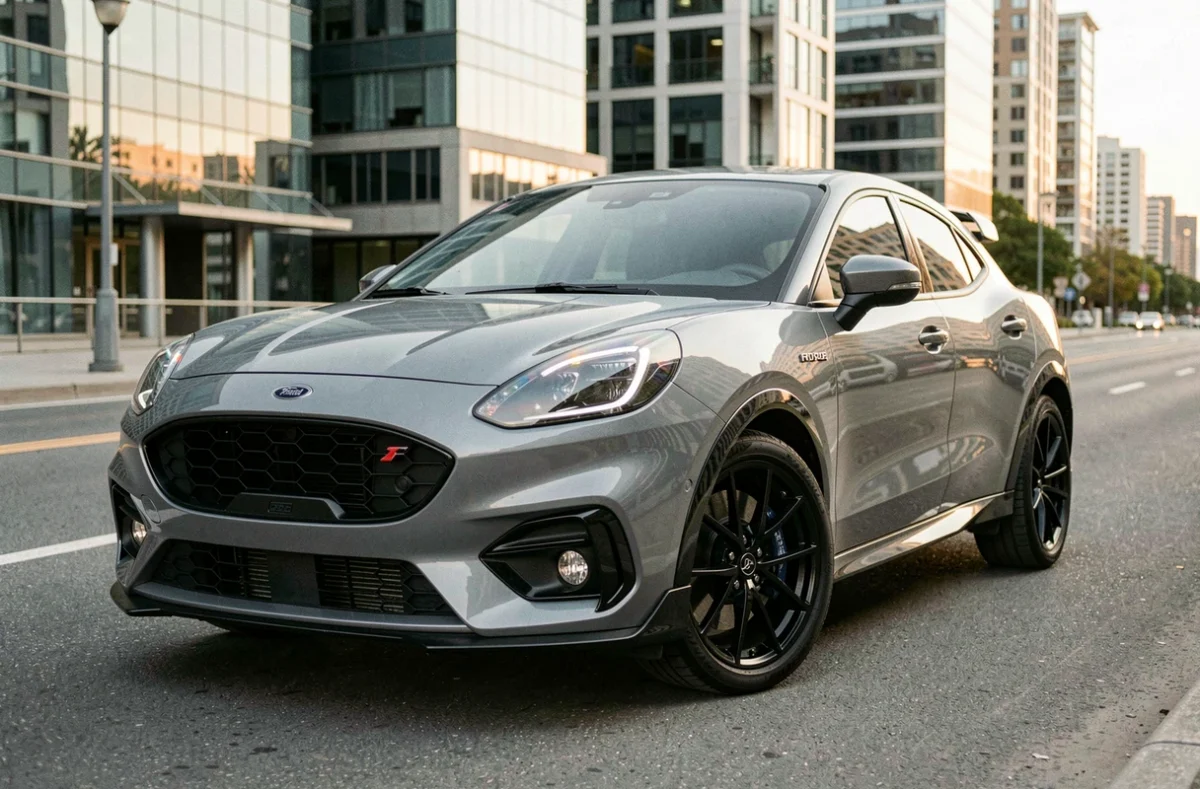
The Solar Grey Ford Puma in ST-Line trim combines a warm metallic shade with the sportiest aesthetic package in the range (excluding pure ST). This combination is not a marketing coincidence: it targets a specific segment of buyers, halfway between the pragmatic urban driver and the crossover enthusiast with a strong temperament.
mHEV 125 hp engine of the Ford Puma ST-Line: what the mild hybrid really changes
The most common powertrain on the Puma ST-Line remains the 1.0 EcoBoost mHEV with 125 hp, paired with a six-speed manual gearbox or, on certain versions, the Powershift automatic transmission. This 48V mild hybrid architecture does not operate like a traditional hybrid: the electric motor never drives the wheels alone.
Its role is limited to assisting the three-cylinder petrol engine during acceleration phases and powering the Stop & Start system.
In practice, the fuel consumption gain compared to a non-hybrid 1.0 EcoBoost remains modest in mixed cycle, but noticeable in the city thanks to the micro-cuts of the petrol engine when approaching traffic lights and during deceleration. This mechanical positioning is aimed at motorists who want to slightly reduce their consumption without managing a charging point or changing their refueling habits.
Those who want to know everything about the Solar Grey Ford Puma will note that the mHEV version does not qualify for any specific aid. In France, the ecological bonus only applies to vehicles that run exclusively on electricity, subject to eco-score, price, and weight criteria. The mild hybrid does not benefit from any bonus or conversion premium reserved for electric vehicles. Therefore, the buyer bears the additional cost of the color and trim without public compensation.
Solar Grey on the Ford Puma: paid option and impact on resale
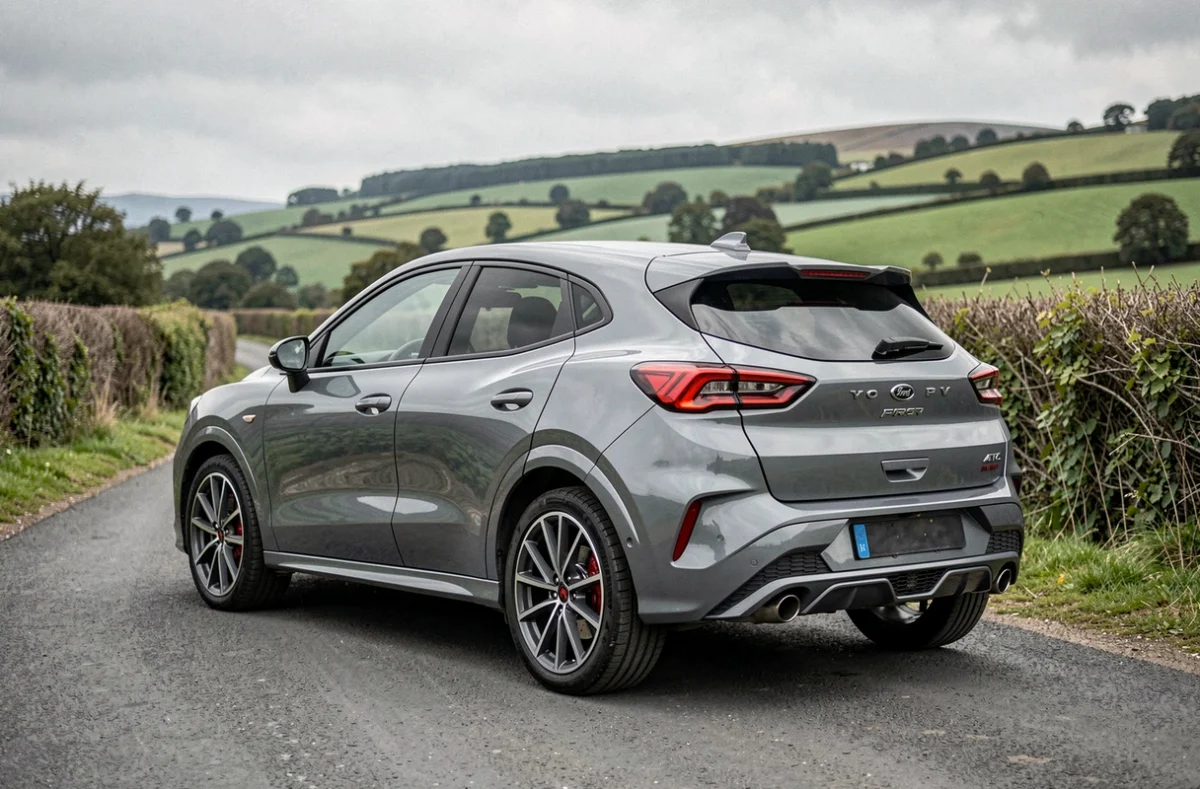
Solar Grey is a metallic paint option, charged additionally compared to the standard non-metallic white. It is not a color linked to the ST-Line trim: it appears in the general Puma catalog and can theoretically be ordered on other equipment levels.
In the recent used car market, the combination of Solar Grey and ST-Line presents a concrete advantage. Neutral metallic shades resell better than bright colors in the compact SUV segment. Solar Grey, neither too dark nor too light, offers a visual compromise that appeals to a wide spectrum of second-hand buyers.
Two-tone Solar Grey and black ST-Line elements
The interaction between the Solar Grey shade and the black treatment specific to the ST-Line (matte black honeycomb grille, mirror caps, side skirts, rear diffuser) creates a subtle two-tone effect that highlights the sculpted volumes of the Puma. The pronounced wheel arches and the shoulder of the body line catch the light differently depending on the angle, an effect that more conventional greys do not reproduce with the same intensity.
This visual rendering explains why Solar Grey attracts more design-conscious profiles than those simply looking for a practical color.
Buyer profile of the Solar Grey Ford Puma ST-Line: usage and real expectations
We recommend distinguishing two typical profiles among buyers of this configuration.
- The active urbanite looking for a versatile vehicle for the week and weekend peri-urban trips, without wanting to switch to electric or manage charging constraints. The mHEV 125 hp meets this requirement with sufficient comfort in the city and on fast roads.
- The buyer sensitive to automotive design, who chooses the ST-Line for its sporty body kit and Solar Grey for its aesthetic customization. This profile is willing to pay for the paint option because they consider the exterior appearance as a key selection criterion.
- The first-time buyer of a compact SUV coming from a sedan or city car and looking for a compact size (the Puma remains under 4.20 m long) with a raised driving position, without switching to a bulkier vehicle like the Ford Kuga.
The common point of these three profiles: none want an exclusively electric vehicle. They prioritize ease of use, the range of a conventional tank, and a controlled purchase budget.
Ford Puma ST-Line against Kuga and hybrid competitors: price positioning and size
The Puma ST-Line is positioned a notch below the Ford Kuga in terms of size, trunk volume, and price. For buyers hesitating between the two, the question often boils down to a trade-off between rear space and urban agility. The Puma clearly wins in maneuverability and ease of parking, while the Kuga offers more generous rear space for families.
Against direct competitors in the segment (Peugeot 2008, Renault Captur, Toyota Yaris Cross), the Puma ST-Line stands out for its chassis and driving pleasure. Feedback regularly highlights a more engaging road behavior than the segment average, thanks to a precise front end and a suspension tuned for responsiveness rather than plush comfort.
MegaBox: the little-known modular advantage of competitors
The MegaBox system integrated under the Puma’s trunk floor remains a functional argument that few rivals offer. This waterproof bin allows for transporting dirty or bulky items in an upright position, a practical solution for users alternating between daily commutes and outdoor activities.
The choice of the Solar Grey Ford Puma ST-Line reflects a purchasing logic where aesthetics, compactness, and mild hybrid mechanics take precedence over the race for public aids or total electrification. This compact SUV targets those who want an expressive vehicle for everyday use without compromising on practicality, and who accept the additional cost of a metallic shade as an investment in personal satisfaction as much as in resale value.