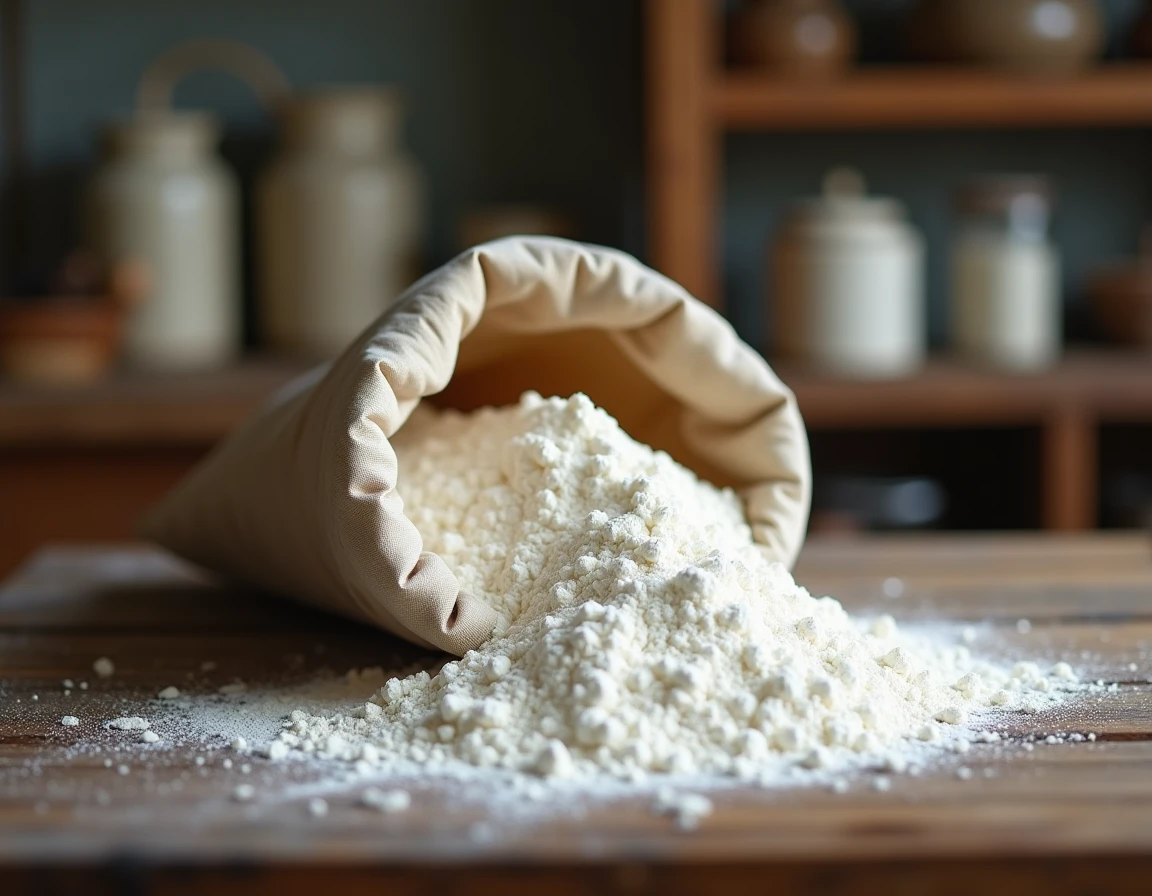
The flour weevil is a microscopic mite of the genus Acarus siro that colonizes dry goods stored in kitchen cupboards. Its size, less than half a millimeter, makes it nearly invisible to the naked eye. An infestation can progress for weeks before a tangible sign alerts the household.
Weevils, psocids, or food moths: a common confusion that delays treatment
Finding tiny white dots on a bag of flour is not enough to make a diagnosis. Acarus siro often coexists with other storage mites, including Tyrophagus putrescentiae and Lepidoglyphus destructor. Their behaviors and sensitivity to treatments differ, making precise identification crucial.
Psocids (small winged insects fond of moisture) and food moths (whose larvae weave silky threads) also cause damage in cupboards. A psocid moves faster than a weevil and measures one to two millimeters, which makes it quite distinguishable. Moths, on the other hand, leave visible webs on packaging.
To understand the dangers of flour weevils, one must first admit that visual identification with the naked eye remains uncertain. In case of persistent doubt, a sample examined under a binocular microscope or sent to a specialized laboratory can clarify the ambiguity and tailor the response.

Sweet smell and moving dust: the real warning signs in your cupboards
Most articles on the subject list visual tips. In practice, the sense of smell often detects an infestation before sight. A significant population of weevils alters the smell of flour or cereals, giving it a sweetish, almost sugary note. This olfactory signal should prompt immediate isolation of the product and inspection of nearby goods.
Visually, a layer of “dust” that seems to move slowly under raking light is the most reliable indicator. Shine a flashlight along the shelves, especially in corners and under opened packages. Weevils flee direct light and gather in shaded areas.
Priority items to inspect
Flour is not the only target. Weevils colonize a wide range of dry products:
- Cereals (oat flakes, semolina, brown rice), whose starch and residual moisture content provide a favorable environment.
- Seeds and dried fruits (flax, sesame, nuts, raisins), often stored for long periods after opening.
- Pet food (kibble, pellets), frequently stored in a poorly sealed bag near the kitchen.
Any opened dry product stored for several weeks deserves checking, even if it appears intact on the surface.
Health risks of storage mites: allergy and cross-reactivity
Contrary to popular belief, the problem is not limited to disgust. Medical literature associates storage mites with respiratory and skin reactions in allergic individuals. Rhinitis, asthma, and contact urticaria are among the documented manifestations.
Cases of oral anaphylaxis related to the ingestion of foods contaminated by these mites have also been described in sensitized individuals. A phenomenon of cross-reactivity with common household mites (type Dermatophagoides) is also reported, meaning that a person already allergic to house dust mites is at increased risk.
Field reports vary on the contamination threshold that triggers these reactions. Available data do not allow for a universal limit. As a precaution, any visibly infested product or one with an unusual odor should be discarded without hesitation.

Freezing, cleaning, and airtight storage: protocol for eliminating weevils
Cleaning alone is not enough. Weevil eggs withstand a simple wipe and survive in the cracks of shelves. An effective protocol combines three simultaneous actions.
Freeze suspicious goods
Placing products in an airtight package in the freezer for about a week limits the survival of eggs and adults. This preventive measure also applies to new packages bought in bulk or those whose packaging appears fragile.
Deep clean storage surfaces
Completely empty the cupboard. Vacuum every groove and corner, then clean with vinegar water. Diatomaceous earth, an abrasive mineral powder for the exoskeletons of mites, can be applied in dry corners before replacing the goods. It works mechanically, without chemicals.
Rethink storage
- Systematically transfer flour, cereals, and seeds into glass jars or airtight containers as soon as the package is opened.
- Avoid storing pet food in the same area as human food.
- Maintain low ambient humidity in cupboards: weevils thrive in humid and warm environments. Regular ventilation of the kitchen reduces their breeding capacity.
Airtight storage remains the most reliable long-term barrier. Without access to food, a population of weevils naturally declines within a few weeks.
The flour weevil does not cause structural damage or spectacular visible nuisance, which explains why it often goes unnoticed. But for households affected by mite allergies, a silent infestation in cupboards poses a real risk. Regularly inspecting dry goods, trusting your nose when an unusual odor appears, and prioritizing airtight storage are the most concrete actions to keep these mites at bay.