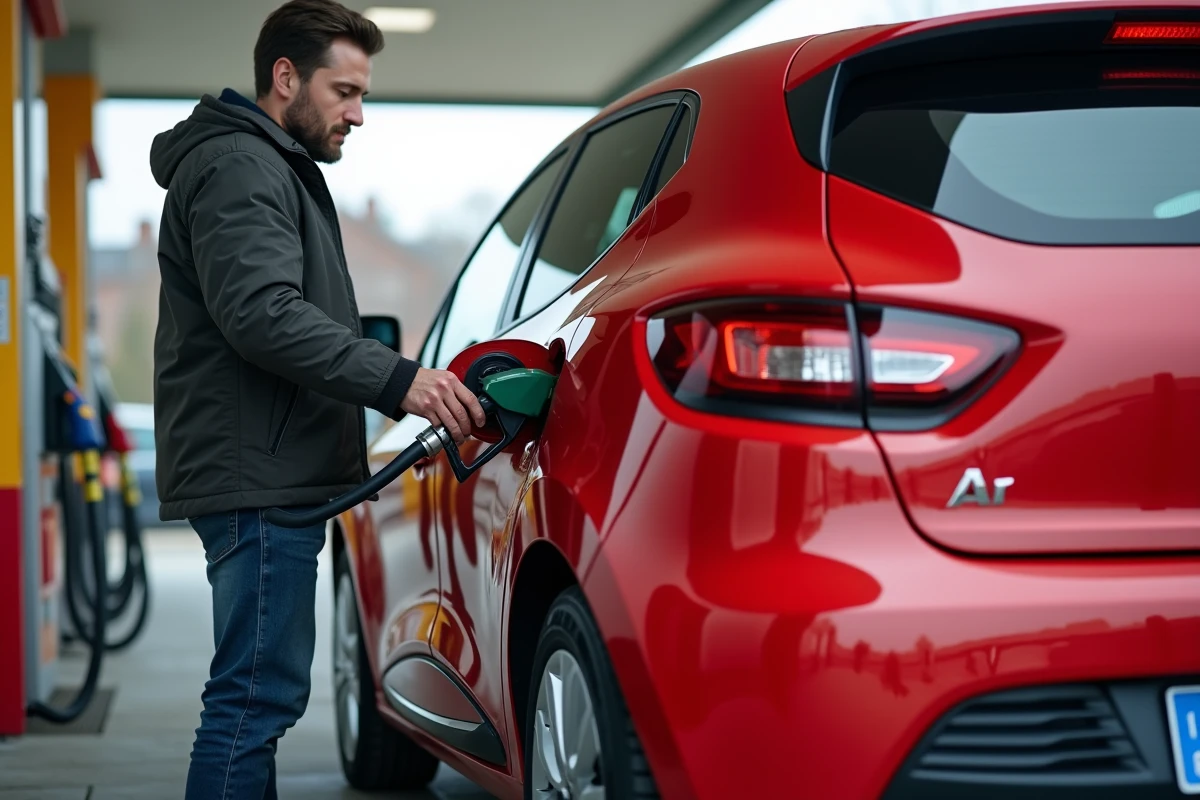
The reserve light comes on the dashboard of your Clio 3. How many kilometers are left before running out of fuel? The answer depends on the engine type, driving style, and even the season. This guide clarifies what the Clio 3’s tank can actually cover once the reserve is reached, and the precautions to take to avoid being stranded on the side of the road.
Faulty level sensor on Clio 3: when the gauge lies
Before discussing range, one point deserves your attention. Have you ever noticed that the gauge needle drops suddenly, or that it stays stuck at a quarter tank for dozens of kilometers? This behavior is common on the Clio 3.
Diesel models produced after 2010 are particularly affected by faulty fuel level sensors. The float located in the tank sends incorrect information to the onboard computer, which distorts both the gauge and the estimated remaining range displayed on the screen.
To learn more about the range and fuel reserve of the Clio 3, you must first understand that the theoretical figures assume a functional sensor. If your gauge behaves erratically, have the fuel pump module checked in the workshop before relying on the displayed range.
Since 2024, feedback on specialized forums has reported an increase in interventions related to this problem, particularly on Planète Renault. Replacing the sensor is cheaper than a breakdown service for running out of fuel on the highway.
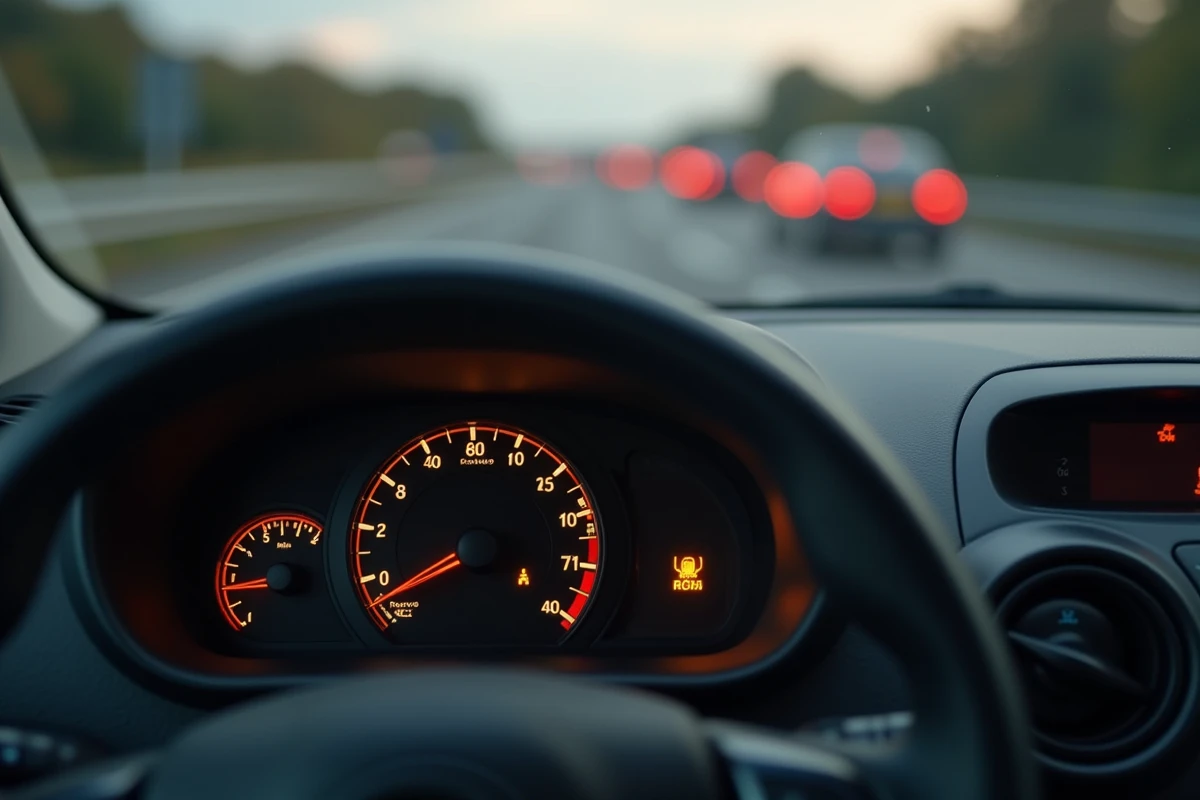
Actual range on reserve Clio 3: what the tank allows
The Clio 3 has a tank of about 50 liters, regardless of the engine type. The reserve corresponds to the amount of fuel left when the warning light comes on. On this model, the reserve represents about 5 liters of fuel.
In practical terms, the distance you can cover depends on your engine’s average consumption. Here’s a simple guideline: divide these 5 liters by your usual consumption per 100 km.
Estimation based on driving style
- In urban driving, with a consumption of around 7 to 8 liters per 100 km, the reserve offers about 60 to 70 kilometers
- On roads or highways at a steady pace, consumption decreases and the range can reach 80 to 90 kilometers
- In winter, with the heating on and slightly less dense fuel, the range on reserve drops by 20 to 30% compared to summer conditions
These estimates apply to a gasoline engine in good condition. Diesel versions, which are more economical, offer a few extra kilometers on the same amount of reserve.
Driving on reserve: the concrete risks for the engine
Regularly driving with the warning light on is not just a game with running out of fuel. The fuel at the bottom of the tank contains more impurities and sediments accumulated over time.
The fuel pump is submerged in gasoline and cooled by it. When the level drops below the reserve, the pump intermittently draws in air. This dry operation causes overheating of the mechanism and accelerates its wear.
On the Clio 3, replacing the fuel pump is a more significant intervention than simple routine maintenance. A useful reflex: never let the tank drop below a quarter repeatedly.
Direct risks to remember
- Premature wear of the fuel pump due to lack of lubrication
- Injection of impurities into the circuit, which can clog the injectors
- Actual running out of fuel if the sensor underestimates the remaining level (a common fault on Clio 3)
- Engine stalling in heavy traffic, posing a safety risk
Clio 3 consumption: levers to gain kilometers
Rather than relying on the reserve, a few habits can help delay the need to refuel. The Clio 3 responds well to driving adjustments thanks to its lightweight.
Maintaining correct tire pressure measurably reduces rolling resistance. Tires under-inflated by a few tenths of a bar are enough to increase consumption on a daily trip.
Engine speed also plays a direct role. Shifting to a higher gear before 2,500 rpm on gasoline versions limits consumption without penalizing the engine. On diesels, this threshold drops to around 2,000 rpm.
The weight carried also deserves attention. A trunk constantly loaded (tools, unnecessary items) adds unnecessary consumption, especially in the city with frequent acceleration phases.
Clio 3 and ZFE restrictions: a parameter not to forget
The range of your Clio 3 is not limited to the tank’s contents. Since 2026, several major French cities are gradually excluding vehicles classified as Crit’Air 2 from their low-emission zones. Gasoline Clio 3s registered before 2011 are directly affected.
Check your Crit’Air sticker before planning a long-distance urban trip. A ban on driving in the city center effectively reduces the usable range of your vehicle, as it imposes detours or parking on the outskirts.
This regulatory parameter changes the game for owners who use their Clio 3 daily in urban areas. It does not concern the mechanics, but it directly impacts how you can use each liter of fuel.
The 50-liter tank of the Clio 3 remains generous for its category. Its overall range exceeds that of several competitors from the same generation, such as the Peugeot 207 or the Citroën C3.
The real risk does not come from the volume of available fuel, but from a sensor that provides false information or from the habit of consistently driving on reserve. Having the gauge checked and keeping at least a quarter tank remains the best assurance against running out of fuel.