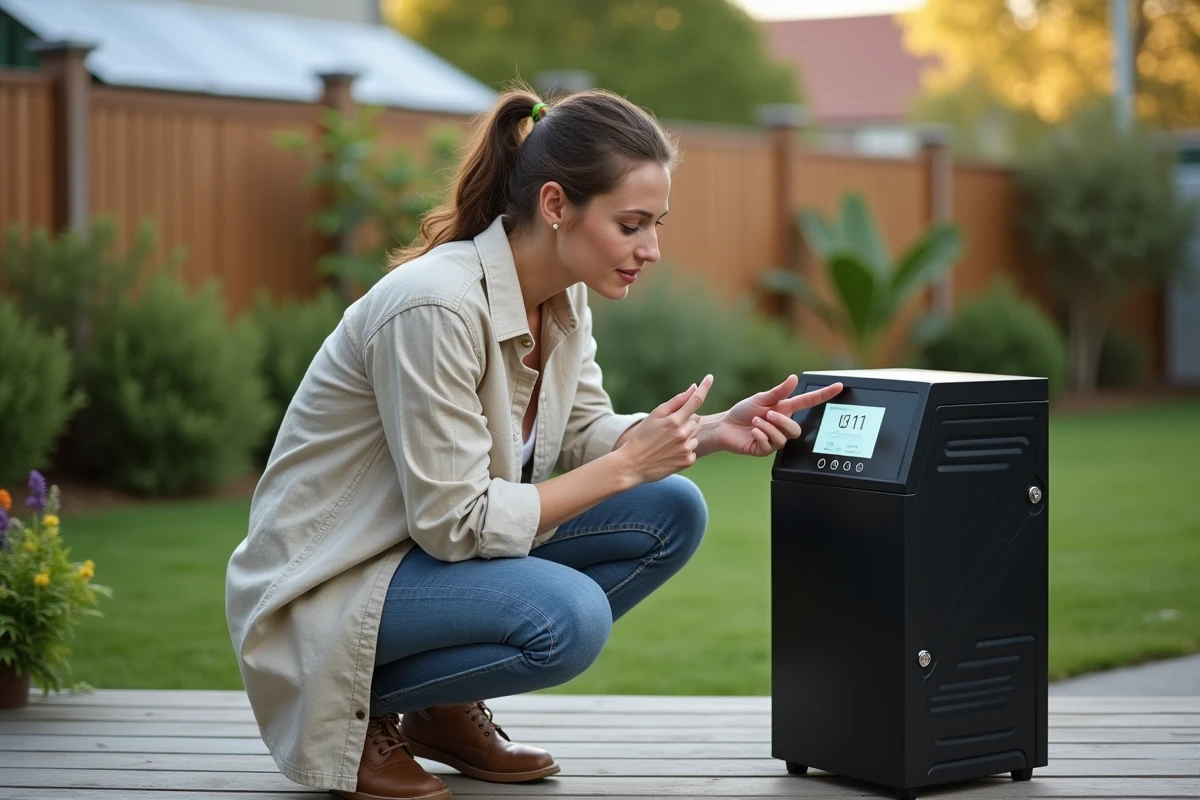
You produce solar electricity during the day, but your consumption mainly increases in the evening. Without storage, a significant portion of this production goes to the grid instead of powering your home. Renting a solar battery allows you to correct this mismatch without mobilizing several thousand euros at once. The principle remains simple: a provider installs and maintains the equipment, and you pay a monthly rent.
Cumulative cost of renting versus buying: the real financial trade-off
Before signing a rental contract, a calculation often overlooked deserves your full attention. The cumulative cost of renting generally exceeds the purchase price of an equivalent battery over the total duration of the contract. The entry ticket is almost zero, but the monthly payments added up over several years represent an amount greater than that of a direct investment.
Why choose renting despite this? Because the main barrier to purchasing is not always the total price, but the immediate cash flow. A household that has just invested in photovoltaic panels may not have the budget to add a lithium storage battery. Renting spreads the expense and makes the project accessible from the first year.
To make a proper comparison, take the total amount of rents over the duration of the contract and compare it to the purchase price of the battery, installation included. If the gap remains reasonable and you prefer to maintain your savings capacity, renting is justified. You can also learn everything about solar battery rental by exploring the different options offered by installers.
Physical battery or virtual storage: which rental model to choose

Most individuals think of “battery” as a lithium box installed in the garage. But an alternative is gaining ground: virtual storage injects the surplus into the grid and returns it as credit on your electricity bill. Before renting a physical battery, this option deserves consideration.
Virtual storage is suitable for households with relatively regular and predictable consumption. No equipment at your home, no maintenance, no replacement of cells after a few years. However, you remain dependent on the grid and the buyback rate offered by the energy supplier.
The rented physical battery makes sense in two specific cases:
- You live in an area prone to power outages and want a backup supply for your priority equipment.
- Your consumption profile is shifted (working during the day, high consumption in the evening) and you want to maximize your self-consumption rate without selling back to the grid.
- You are considering a future transition to partial autonomy, and renting allows you to test a storage system before committing to a purchase.
In all other cases, compare the two models by looking at the actual savings on your electricity bill, not just the announced capacity in kWh.
What a solar battery rental contract covers
The “service” aspect of renting is often underestimated. Maintenance, warranty, and replacement are generally included in the monthly rent. Specifically, if the battery loses performance or fails, the provider intervenes at no extra cost. This point changes the game compared to a purchase, where the manufacturer’s warranty does not always cover labor costs or the technician’s travel.
Have you noticed that energy contracts sometimes contain vague clauses about early termination? For solar battery rental, check three elements before signing:
- The commitment duration and the conditions for early termination, particularly the buyback of the residual value of the equipment.
- The exact scope of included maintenance: cleaning, system management updates (BMS), replacement of degraded cells.
- The ownership of the equipment at the end of the contract: some contracts provide for a buyout option at a decreasing price, while others require the return of the battery.
Read the early termination clause before the price clause. An attractive rent loses its appeal if you are locked in for the entire duration without the possibility of buyout.

Concrete steps to rent a solar battery
The rental process is broken down into a few distinct phases, shorter than a purchase project since the provider manages part of the procedures.
Assess your production and consumption
Record your monthly photovoltaic production and compare it to your consumption during off-peak and peak hours. The goal is to determine the appropriate storage capacity for your installation. An oversized system inflates the rent without improving your self-consumption.
Compare available rental offers
Contracts vary in duration, rent amount, included services, and the battery technology offered (lithium-ion in the vast majority of cases). Always ask for the total cost over the duration of the contract, not just the monthly payment.
Validate technical compatibility
Your solar panel installation must be compatible with the proposed battery. The provider conducts a technical visit to check the connection to the existing system, available space, and inverter configuration. This step conditions the final sizing.
Sign and schedule the installation
Once the contract is signed, the installation generally takes a few hours. The provider connects the battery, configures the energy management system, and conducts charge tests. You start storing your solar production from day one.
Renting a solar battery reduces financial risk while increasing your self-consumption rate. The compromise lies between a cumulative cost higher than a purchase and immediate accessibility without capital investment. If your priority is to smooth your consumption without tying up capital, this is a lever that deserves to be precisely calculated with an installer.