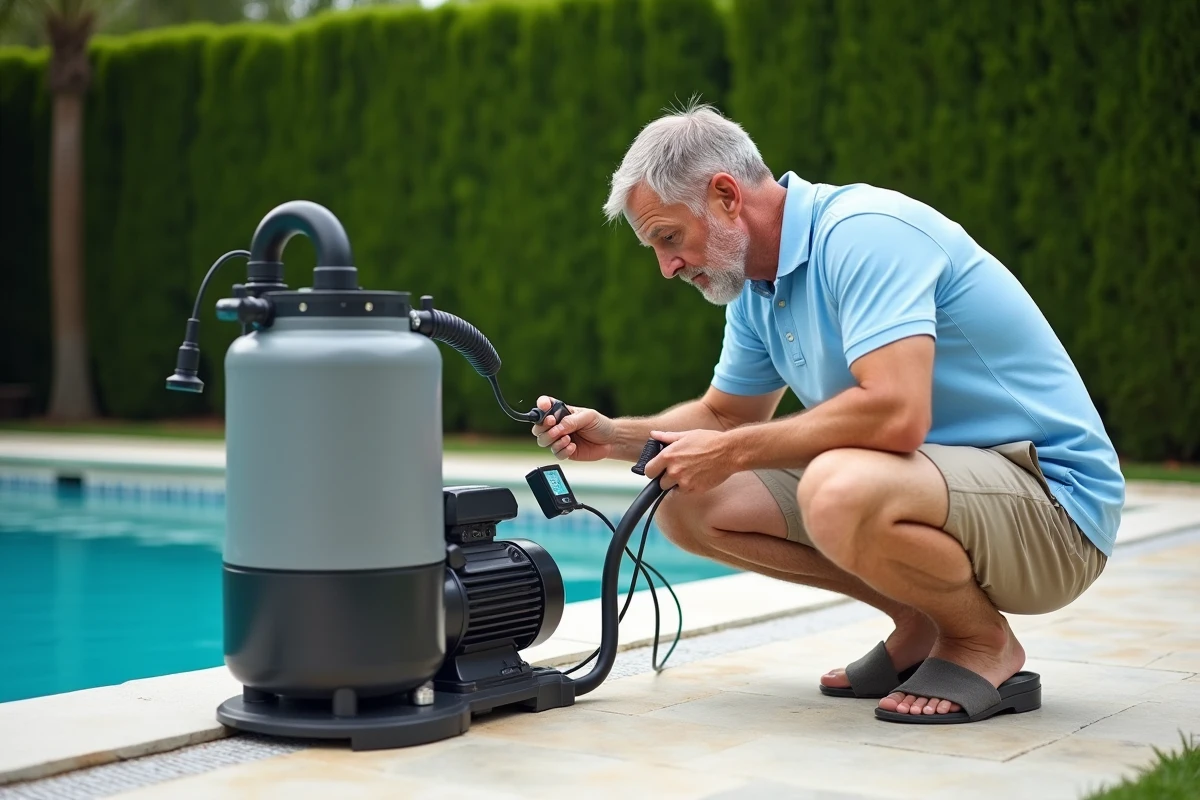
The sand filtration pump represents the dominant electrical component of a swimming pool, sometimes accounting for up to 70% of the pool’s energy bill. Reducing this consumption is not just about lowering the filtration time: it involves a trade-off between hydraulic sizing, motor speed, and the choice of filtering media.
Oversizing the sand pump: the most costly installation error in kWh
We regularly observe pumps calibrated for a pool twice the volume of the one they serve. The pool installer installs a pump with a higher flow rate “for safety,” which generates excess pressure in the sand filter and disproportionate electrical consumption.
The right reflex is to bring the pump’s flow rate closer to the strict hydraulic need. The total volume of the pool should be circulated in four to six hours depending on the water temperature. Beyond that, each additional cubic meter per hour adds to the bill without improving filtration quality.
Before any other optimization, we recommend checking the compatibility between the nominal flow rate of the pump, the diameter of the sand filter, and the actual volume of the pool. An undersized filter facing a pump that is too powerful leads to excessive pressure losses, which strains the motor and increases consumption. A balanced hydraulic circuit significantly reduces motor load, much more than a simple adjustment of filtration schedules.
To delve deeper into power calculation and reading flow curves, Habiz’s advice details the parameters to consider based on your installation’s configuration.
Variable speed pump or single-speed pump: the real profitability threshold
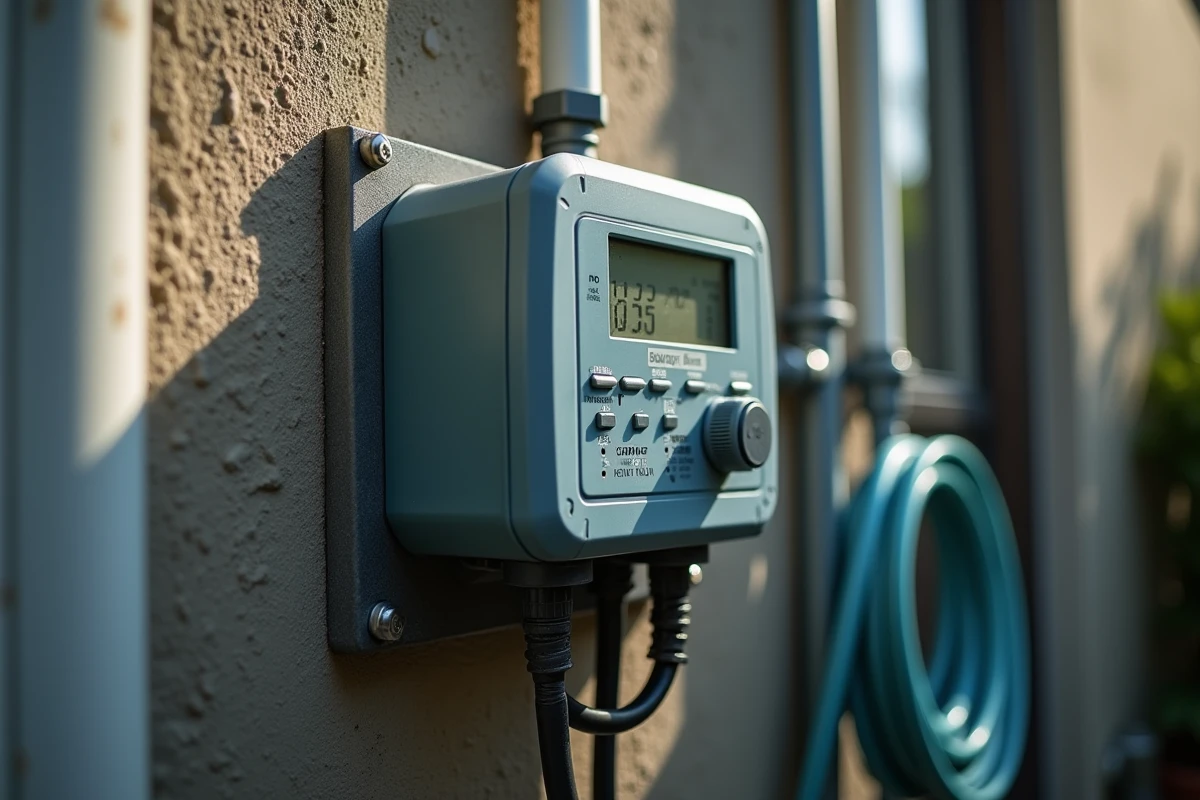
A variable speed pump continuously adjusts its motor speed thanks to an integrated frequency inverter. The electrical consumption of a motor follows a cubic law relative to its rotational speed: reducing the speed by half theoretically divides the consumption by eight. In practice, mechanical and hydraulic losses mitigate this ratio, but the gain remains considerable as long as the pump operates at reduced speed for most of the filtration cycle.
The additional purchase cost compared to a classic single-speed pump is real. We recommend evaluating profitability based on three concrete criteria:
- The volume of the pool: below about ten cubic meters, the base consumption is so low that the return on investment stretches over many years.
- The annual filtration duration: a pool used six months a year in southern France puts much more demand on the pump than a pool covered for three months in Brittany. The longer the operating duration, the more the kWh savings justify the investment.
- The applied electricity rate: with the rise in the price of kWh in recent years, the profitability threshold has shortened for most medium-sized residential installations.
For a pool of standard volume (between 30 and 60 m³), the variable speed pump becomes profitable within a few seasons. Below this threshold, replacing an oversized single-speed pump with a properly sized single-speed model already provides a measurable gain without the additional cost of the inverter.
Filtering media and pressure losses: an underestimated lever on electrical consumption
Classic silica sand remains the most common media in sand filters. Its grain size degrades over time, increasing pressure losses and forcing the pump to work harder to maintain flow.
The pool industry is increasingly turning to alternative filtering media. Filter glass has a smoother surface than sand, which reduces hydraulic resistance and decreases the frequency of backwashing. Fewer washings mean fewer full-speed cycles for the pump, resulting in direct energy and water savings.
Regenerative media go further by allowing cleaning in a closed circuit without draining the filter. The gain applies both to electrical consumption and to the volume of water discharged during washings.

We recommend checking the condition of the filtering media at least once per season. Clogged or compacted sand for several years represents an invisible source of overconsumption, as the pressure gradually rises and the owner becomes accustomed to it without consulting the manometer.
Scheduling and automation of pool filtration
The classic rule “water temperature divided by two equals filtration time in hours” remains a useful guideline, but it does not take into account the variable cost of electricity during different time slots. Scheduling filtration during off-peak hours reduces the bill without affecting operating time.
Recent automation systems go beyond simple timers. Some boxes integrate a temperature sensor and automatically adjust the filtration duration day by day. Others allow for remote monitoring, preventing the pump from running unnecessarily during prolonged absences.
Automation does not replace proper sizing, but it corrects seasonal deviations. In the off-season, when the water temperature drops significantly, reducing the filtration time by several hours per day represents a non-negligible cumulative saving over the entire year.
Maintenance of the hydraulic circuit and energy savings
A clogged pre-filter basket, a partially obstructed hose, or a partially closed valve is enough to increase pressure in the circuit. The pump compensates by consuming more to maintain flow.
- Clean the skimmer’s pre-filter basket and the pump’s pre-filter basket weekly during the swimming season.
- Check the tightness of the connections and the absence of air intake on the suction side, which strains the motor and degrades efficiency.
- Monitor the pressure on the filter’s manometer: a rise of 0.3 to 0.5 bar compared to the clean pressure indicates that backwashing is necessary.
These simple actions maintain the nominal efficiency of the pump and prevent a gradual increase in consumption. A clean hydraulic circuit, combined with proper sizing and appropriate scheduling, forms the basis of an energy-efficient installation. Switching to a variable speed pump only makes sense if these fundamentals are already in place.